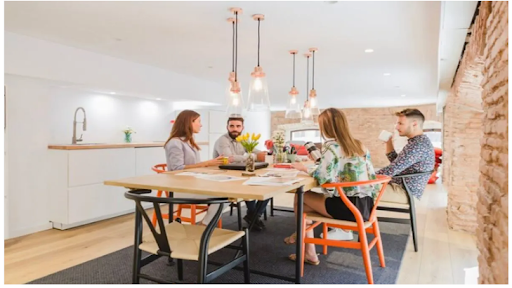
Co-living spaces are a form of communal accommodation setup where residents where residents generally share common areas, while having private bedrooms. In the opinion of Joe Cianciotto, even though the concept of co-living is not at all new, the contemporary co-living model has particularly gained prominence somewhere around the second decade of the 21st century. The co-living model is characterized by providing flexibility, convenience, affordability, and community-driven housing solutions to the residents. With the rising real estate prices in urban areas and an increasingly solitary lifestyle led by people, many are exploring new ways of living. Co-living has become an attractive accommodation option for these people.
Joe Cianciotto briefly discusses how co-living makes the most of limited resources
Soaring prices of real estate, especially in large cities, as well as rising population, pose considerable challenges for urban housing. As a growing number of people search for affordable living options, communal co-living spaces have emerged as a smart and creative solution. It provides people with quality living conditions by making use of clever space optimization strategies. With the implementation of innovative design techniques, many co-living communities today are able to maximize every square foot and create functional spaces within compact footprints.
Developers in many parts of the world are facing significant spatial constraints while attempting to create new residential projects. After all, they often work with limited land availability and zoning regulations that restrict building heights and densities. Moreover, residents also have to grapple with issues like shrinking living spaces, as the demand for urban housing outplace supply. Compact living quarters and micro-apartments are gradually gaining traction, which requires people to adapt to living environments with minimal square footage and increased density. In many ways, co-living spaces have emerged as a remedy to such spatial constraints. They help optimize limited square footage with the help of innovative design strategies and shared amenities.
Co-living spaces often embrace open-concept layouts, vertical space utilization and multipurpose furniture, which allows such communities to efficiently maximize the functionality of compact individual units. Features like transformable living spaces, built-in storage solutions and lofted sleeping areas enable residents of co-living spaces to enjoy their private quarters while also minimizing underutilized space.
According to Joe Cianciotto, co-living developments generally incorporate a wide variety of shared common areas and amenities, like fitness facilities, lounges, co-working spaces and communal kitchens. Such an approach reduces the need for duplicated resources within each unit, thereby freeing up square footage for living spaces. Co-living spaces have emerged as quite a viable housing option for urban dwellers wanting budget-friendly accommodation in increasingly dense city environments. Many strategies are used in such developments to make the most of limited space.
The strategic use of vertical space is among the most effective space-saving approaches employed by co-living buildings. Rather than depending on horizontal layouts, such developments may incorporate compact spiral staircases, multi-level storage solutions and lofted sleeping areas. The use of multipurpose, flexible furniture that can adapt to varying needs throughout the day has also become common in co-living spaces. These units typically come equipped with transformable furniture and movable partitions, which enables residents to reconfigure their living areas as necessary.