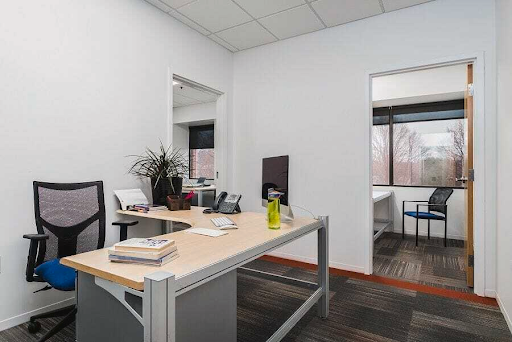
Securing office space in Saudi Arabia requires companies to be aware of the local market environment and the legal requirements they face. Being well-informed about the law, expenses and practical matters guarantees a smooth leasing process. This guide provides a clear description of every stage, from gathering market information to signing agreements, so companies can proceed with confidence toward successful development.
1. Understanding the Saudi office market
Before looking for office space, businesses should first understand the Saudi office market. There are many kinds of workplaces in major cities like Riyadh, Jeddah and Dammam such as office towers in the heart of the business areas and coworking spaces in commercial zones. Decision making should depend on factors like building grade, accessibility to transportation networks, amenity availability and proximity to clients or authorities. Economic diversification initiatives under Vision 2030 have caused market trends to change, resulting in increased demand for technology, finance and professional services. Competition among landlords can influence lease terms and the incentives offered which is another reason to consult recent market information and visit places in person. If enterprises keep an eye on vacancy rates, rental prices and developing business districts, they can select the right location, manage their budgets well and remain competitive in the Kingdom’s business environment.
2. Legal requirements and regulations
Following Saudi regulations is necessary to ensure a proper leasing process. Anyone planning to invest in China as a foreigner should be aware of restrictions set by the Foreign Investment Law on property rights and ownership. Usually, companies from abroad team up with a local sponsor or set up a limited liability company to comply with the regulations. Commercial registrations are issued by the Ministry of Commerce and Investment, while the Saudi General Authority of Zakat and Tax requires businesses to register for tax purposes. The Baladiya gives municipal approval to confirm the chosen office space meets the required zoning laws and building regulations. Usually, a Notary Public (Mahkama) must notarize a lease agreement and tenants ought to confirm that the terms include rules for rent increases, who is responsible for upkeep and how to deal with defaults. Hiring experts who specialize in real estate can speed up the process, avoid contractual issues and guarantee that national laws and regulations are met.
3. Budgeting and cost considerations
Budgeting accurately helps prevent costs from increasing during the leasing process. Besides the monthly rent, tenants should budget for security deposits worth three months’ rent and advance payments that can last one to two years. Additional costs for utilities, cleaning, security and common-area maintenance (CAM) can account for 10–30% of the total rent, depending on the grade and perks of the building. Expenses related to interior design, furnishings and technology should be included as separate items in the budget. Before signing a lease, companies should consider the total cost of occupancy for the entire lease period, including annual rent raises of 5–10% and the expense of breaking the lease early. Since currency rates may vary for multinational companies, it is wise to have rent reviews based on international indices or secure rental deals with fixed rates for several years. By considering all likely expenses, businesses can ensure financial stability and plan their return on investment reliably.
4. Finding and evaluating properties
Hiring experienced real estate advisors or using specialized digital services can help you find suitable office spaces more quickly. Detailed property dossiers including floor plans, building specifications, compliance certificates and tenant mix information should be requested by companies. Natural light, ventilation, parking capacity and surrounding infrastructure such as public transport links, retail outlets and dining options need to be assessed through site visits. Businesses must calculate the effective cost per square meter including incentives such as free rent periods and landlord funded fit out. Those considering flexible lease terms should consider serviced offices and business centers for scalability. Penalties for early exit can be minimized by paying careful attention to lease duration and exit clauses. This is also a good stage to negotiate the rent for office space in Saudi Arabia, to ensure that the agreed terms match the current market rates as well as the tenant’s particular operational needs.
5. Utilizing support services
Many companies use professional networks to facilitate their entry into the market. There are many business chambers, consulting firms and agencies available that provide expert advice on site selection, legal checks and negotiation. Moreover, foreign business support services in Saudi Arabia assist companies with incorporation, visa applications and compliance. They can assist with contacting authorities, managing paperwork and helping with various administrative tasks. Access to these services decreases hold-ups caused by bureaucracy and ensures that all requirements are met within the set timelines. Collaborating with reliable partners allows businesses to concentrate on their main operations as the support team manages the logistics, regulations and finances for leasing and setting up in Saudi Arabia.
6. Finalizing the lease agreement
After the selection of a property, tenants are advised to finalize the contract by carefully going through all the terms and conditions of the property. The duration of the lease, rent payment schedule, renewal options, service charge calculations and responsibilities for maintenance and repairs should be specifically detailed in the lease. Confidentiality clauses and other dispute resolution mechanisms, including arbitration in accordance with the Saudi Center for Commercial Arbitration, should be included. It is always advisable to have a joint inspection with the landlord before signing and record the existing condition of the premises in a handover report. To ensure enforce ability, both parties must see to it that the lease is duly notarized and registered with the concerned municipality. Following execution, businesses can then commence fit-out works, IT installations and utility connections to make the space fully operational by the agreed move in date.
Opening an office in Saudi Arabia calls for careful preparation, thorough investigation and teaming up with seasoned experts. To secure space that helps the business thrive and operate efficiently in Saudi Arabia, companies should focus on the market, obey all regulations, set an accurate budget, assess properties effectively, use support services and create complete lease agreements.