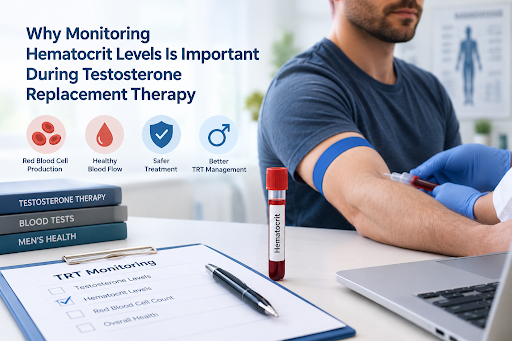
Testosterone replacement therapy (TRT) can help men with clinically low testosterone manage symptoms such as reduced energy, low sex drive, and loss of muscle mass. However, treatment requires regular medical monitoring to check how the body responds. One important part of this process is measuring hematocrit, which shows how much of the blood consists of red blood cells.
Monitoring hematocrit levels helps healthcare professionals identify changes that may need further evaluation. This is especially important because testosterone can stimulate red blood cell production, sometimes causing hematocrit to rise above the normal range. Understanding these changes allows patients and their doctors to make informed decisions about ongoing treatment.
What Is Hematocrit and Why Does It Matter?
Hematocrit is the percentage of your blood volume made up of red blood cells. For example, a hematocrit result of 45% means that red blood cells account for approximately 45% of the total volume of the blood sample.
Red blood cells contain hemoglobin, a protein that carries oxygen from the lungs to tissues throughout the body. Having an appropriate number of red blood cells helps supply oxygen to organs and muscles.
Hematocrit is usually measured as part of a complete blood count (CBC), a common blood test that provides information about different blood components. Doctors interpret the result using factors such as age, sex, laboratory reference ranges, medical history, and other test findings.
A hematocrit result outside the expected range does not automatically mean that someone has a serious health problem. Dehydration, smoking, certain medical conditions, and living at high altitudes can influence the result. This is why medical professionals consider the full clinical picture rather than relying on one number alone.
How Testosterone Replacement Therapy Affects Hematocrit
Testosterone influences the body’s production of red blood cells. During testosterone replacement therapy, this effect can increase red blood cell production and lead to a higher hematocrit level.
For some men, the change remains within the expected range. Others may develop elevated hematocrit, a condition often described as erythrocytosis when red blood cell concentration increases beyond the normal range.
The likelihood of this change can depend on several factors, including the testosterone dose, treatment formulation, individual response, age, smoking status, and existing health conditions. Some men may experience a more noticeable increase than others, even when they are receiving treatment under medical supervision.
An increase in hematocrit does not necessarily mean that testosterone therapy must be stopped. Instead, it is a reason for the treating clinician to review the results, assess possible contributing factors, and determine whether any changes to the treatment plan are appropriate.
Why High Hematocrit Levels Need Attention
When hematocrit becomes too high, the blood contains a greater proportion of red blood cells. This can increase blood viscosity, meaning the blood may become thicker and flow less easily under certain circumstances.
Elevated hematocrit during testosterone therapy is a concern because increased red blood cell concentration may be associated with a higher risk of blood clots and related complications. However, the precise level at which individual risks increase is not fully established, and the result must be interpreted in context.
Some people may not notice any symptoms when their hematocrit rises. Others may experience headaches, dizziness, blurred vision, or unusual tiredness. These symptoms can have many causes, so they should not be used to diagnose high hematocrit without appropriate testing.
Seek urgent medical attention for symptoms such as sudden shortness of breath, chest pain, or one sided leg swelling and pain, especially if a blood clot is suspected.
If a blood test shows an elevated result, contact your healthcare professional for advice. Do not stop testosterone, change your dose, or arrange blood removal on your own. Depending on the findings, a clinician may repeat the test, review other possible causes, assess treatment levels, or recommend an adjustment to the treatment plan.
How Often Should Hematocrit Be Checked During TRT?
The timing of blood tests depends on a patient’s health, treatment plan, and previous results. However, established medical guidance provides a useful starting point.
The Endocrine Society recommends checking hematocrit before starting testosterone therapy, again approximately three to six months after treatment begins, and then annually. A doctor may recommend more frequent testing if the level is elevated, the treatment dose changes, or other risk factors are present.
These checks help establish a baseline and show how the body responds to treatment over time. They also allow a healthcare professional to identify a rising trend before it becomes a more significant concern.
An important threshold in clinical guidance is a hematocrit above 54%. When this occurs during testosterone therapy, the Endocrine Society recommends withholding treatment until the level returns to a safe range, evaluating possible causes such as low oxygen levels or sleep apnea, and considering restarting treatment at a lower dose under medical supervision.
This threshold is a clinical decision point, not a target to approach or a reason to wait before seeking advice. Patients should follow their own clinician’s instructions, particularly when a result is already outside the laboratory’s reference range.
For further information, readers can consult the Endocrine Society’s testosterone therapy clinical practice guidelines.
How to Understand Hematocrit Trends Over Time
A single blood test provides information about one point in time. Comparing several results can offer a clearer picture of whether hematocrit is stable, increasing, or returning toward an expected range.
For example, imagine a patient whose hematocrit was 44% before TRT, 47% after three months, and 50% at a later appointment. These results show a gradual increase. They do not establish a diagnosis or automatically mean that treatment must change, but they give the clinician a reason to review the pattern and decide whether closer monitoring is needed.
It is also important to consider temporary influences. Dehydration can make hematocrit appear higher because the liquid portion of the blood has decreased. Smoking, sleep apnea, lung conditions, and other health factors may also contribute to elevated levels.
When comparing results, pay attention to:
- The direction of change: Is hematocrit stable, rising, or falling?
- The time between tests: A change over several weeks may need a different assessment from a similar change over several years.
- The laboratory reference range: Different laboratories may use slightly different ranges.
- Treatment changes: Record any testosterone dose or formulation changes and when they occurred.
- Other health factors: Mention relevant symptoms, illnesses, hydration concerns, smoking, or sleep related problems to your clinician.
Avoid comparing numbers without considering these details. A gradual rise and a sudden change may both deserve attention, but their significance depends on the full medical picture.
Practical Ways to Keep Track of Blood Test Results
Keeping an organized record of blood tests can make medical appointments more productive. Instead of relying on memory, patients can review previous results and share an accurate timeline with their healthcare professional.
A simple spreadsheet, notebook, or online hematocrit tracker can help record important details in one place. The goal is to make information easier to review, not to interpret results without medical guidance.
For each test, consider recording:
- The date of the blood test
- The hematocrit result and its unit or percentage
- The laboratory’s reference range
- Your current testosterone dose and treatment formulation
- Any recent treatment changes or relevant symptoms
- Notes or recommendations from your healthcare professional
For example, if you notice that your hematocrit has increased across three consecutive tests, you can share those results with your doctor. This makes it easier to discuss whether the pattern requires another blood test, further investigation, or a change in monitoring frequency.
Keep copies of your original laboratory reports whenever possible. A tracking record is useful, but it should not replace the official results or your medical records.
Other Factors That Can Affect Hematocrit
Testosterone is not the only factor that influences red blood cell production. Obstructive sleep apnea, smoking, chronic lung disease, and certain other medical conditions can contribute to elevated hematocrit.
Dehydration can also affect test results by reducing plasma volume, making the red blood cell percentage appear higher. If a result is unexpected, your clinician may recommend repeating the blood test under appropriate conditions and investigating other possible explanations.
It is worth discussing sleep quality, breathing problems during sleep, smoking habits, and existing health conditions during TRT appointments. These details can help your healthcare professional assess the result more accurately.
Patients should also understand that drinking extra water is not a substitute for medical evaluation when hematocrit is elevated. Similarly, donating blood or undergoing therapeutic phlebotomy should only be considered with appropriate clinical advice.
Conclusion
Monitoring hematocrit is an important part of testosterone replacement therapy because treatment can increase red blood cell production and, in some men, cause levels to rise too high. Regular blood tests help healthcare professionals assess this response, identify concerning changes, and decide whether further evaluation or treatment adjustments are needed.
Patients can contribute by attending scheduled tests, keeping accurate records, and discussing unusual results with their healthcare team. Looking at trends over time is more informative than focusing on one number in isolation.
Ultimately, the safest approach is to combine consistent monitoring with professional medical guidance. An organized record can support better conversations with your doctor, while treatment decisions should always be based on your individual health and clinical assessment.