The Royal Enfield Hunter 350 has become one of the clearest examples of how a heritage motorcycle brand can attract a younger urban audience without abandoning its mechanical identity. It uses the same basic 349cc J-series engine found in more traditional Royal Enfield 350s, but packages it in a shorter, lighter and more contemporary roadster.
That formula matters because younger riders often want a motorcycle that feels distinctive without becoming difficult to manage. The Hunter provides the torque and road presence associated with a 350cc Royal Enfield while using 17-inch wheels, a compact stance and straightforward ergonomics. Recent updates to the Royal Enfield Hunter 350 specifications also address practical concerns such as ride comfort, clutch effort, navigation and charging.
Its Design Breaks from Traditional Royal Enfield Expectations
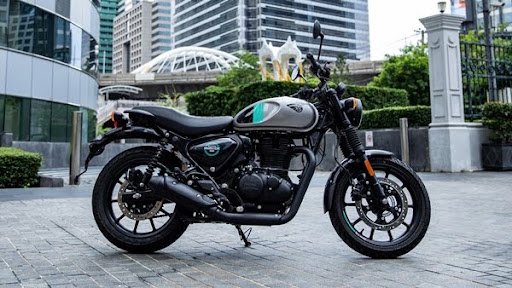
The Hunter does not look like a smaller Classic or Bullet. Its shorter fenders, compact tail, alloy wheels on Metro variants and wide tyre proportions give it a roadster appearance. The colour palette is also more playful, with choices such as Tokyo Black, London Red, Rebel Blue, Rio White and other contemporary finishes depending on the current variant range.
This is important for riders who like the Royal Enfield badge and engine character but do not identify with deeply traditional styling. The Royal Enfield Hunter 350 feels casual and urban. It can be parked outside a college, co-working space or café without looking like a scaled-down touring machine.
Royal Enfield Hunter 350 Specifications Explained
The current Hunter uses a 349cc single-cylinder, four-stroke, air-oil-cooled engine. Maximum power is 20.2 bhp at 6,100 rpm, while peak torque is 27 Nm at 4,000 rpm. The engine is paired with a five-speed constant-mesh gearbox and, on the current model, an assist-and-slip clutch.
Royal Enfield Hunter 350 Specifications also include chassis dimensions that reinforce the urban brief. The wheelbase is 1,370 mm, ground clearance is 160 mm and seat height is 790 mm. Kerb weight is about 181 kg, while the fuel tank holds 13 litres.
| Specification | Hunter 350 |
| Engine | 349cc, single-cylinder, air-oil-cooled |
| Maximum power | 20.2 bhp at 6,100 rpm |
| Maximum torque | 27 Nm at 4,000 rpm |
| Gearbox | 5-speed |
| Seat height | 790 mm |
| Wheelbase | 1,370 mm |
| Ground clearance | 160 mm |
| Kerb weight | About 181 kg |
| Fuel capacity | 13 litres |
These numbers explain much of the motorcycle’s appeal. The seat is accessible, the wheelbase is shorter than many traditional 350cc motorcycles, and the mass is kept lower than the Classic or Bullet. It still feels substantial, but it is less intimidating at walking pace.
The Engine Delivers the Kind of Performance New Riders Can Use
Twenty horsepower may not sound dramatic in an era of increasingly powerful small motorcycles, but the Hunter’s torque arrives low enough to make it feel responsive in everyday riding. The engine can pull through city traffic without requiring constant high-rpm operation.
For a rider stepping up from a 100cc or 125cc motorcycle, this makes the transition easier. There is noticeably more torque and stronger roll-on acceleration, but the power delivery remains predictable. The motorcycle does not demand expert throttle control or a committed sport-riding posture.
The Latest Comfort Updates Fix a Key Weakness
Earlier Hunter 350 versions were often criticised for a firm rear suspension on rough roads. Royal Enfield has since revised the suspension and seat cushioning. The latest bike uses twin rear shock absorbers with six-step preload adjustment and updated calibration intended to improve comfort.
This matters greatly to younger riders using the motorcycle as their primary vehicle. Weekend performance is only one part of ownership; the bike must also deal with speed breakers, patched roads and long traffic queues. A more compliant setup improves the Hunter in the environment where it spends most of its time.
Modern Convenience Features Fit Urban Use
Current Metro versions add an LED headlamp, Tripper navigation equipment and USB Type-C fast charging. These are small features individually, but together they make the bike better suited to modern commuting.
Phone charging is especially useful for riders who rely on navigation or communication through the day. Tripper navigation reduces the need to mount and constantly check a phone. The assist-and-slip clutch is another meaningful improvement because lighter clutch action can reduce hand fatigue in dense traffic.
Handling Is More Approachable Than Traditional 350s
The Hunter uses 17-inch wheels at both ends. Alloy-wheel variants wear a 110/70 front tyre and a broad 140/70 rear. The smaller wheels and compact geometry make the motorcycle easier to lean and change direction than heavier, longer Royal Enfield models.
This gives the Hunter a confidence-building quality. Newer riders often struggle more with low-speed balance and tight manoeuvres than with normal straight-line riding. A motorcycle that feels responsive without being nervous can shorten that learning curve.
It Also Works as a Lifestyle Motorcycle
Young buyers do not always separate transportation from personal style. The Hunter fits that reality because it has a strong visual identity without appearing overly formal. The compact tank, exposed frame elements, short tail and bold colours create a motorcycle that photographs well and is easy to personalise.
Royal Enfield’s accessory ecosystem also allows owners to add practical or cosmetic parts without heavily modifying the bike. That mix of factory identity and personalisation potential supports the lifestyle aspect of ownership.
The Price Position Broadens Its Audience
The Hunter sits among the more accessible entry points into Royal Enfield ownership, with official pricing beginning in the low-₹1.5 lakh ex-showroom range for current configurations. Higher variants cost more depending on equipment and colour.
That position is important because it brings the 350cc platform closer to buyers who might otherwise compare premium 150cc or 160cc motorcycles. The Hunter therefore competes not only with retro 350s but also with smaller performance-oriented roadsters.
There Are Still Practical Compromises
The Hunter is lighter than some Royal Enfields, but 181 kg is not truly lightweight. Buyers coming from a 110cc commuter will still notice the extra mass. Fuel economy is also lower than smaller-capacity commuter bikes; Royal Enfield quotes around 36.2 km/l under ideal conditions.
Tall riders may find the compact dimensions less spacious than larger motorcycles. Those who spend most of their time touring with luggage and a pillion may prefer a model with a longer, more relaxed layout.
Why Young Riders Continue to Choose It
The Royal Enfield Hunter 350 succeeds because it reduces the barriers that can make traditional mid-capacity motorcycles feel intimidating. It is compact enough for urban use, torquey enough to feel special, visually distinctive and now better equipped for daily life.
Its updated suspension, assist-and-slip clutch, Type-C charging and navigation options strengthen the ownership case beyond styling. Young riders get a motorcycle that carries Royal Enfield character without requiring them to adopt the size, weight or traditional appearance of a Classic or Bullet. That combination of accessibility and identity is a strong reason the Hunter continues to connect with a younger audience.