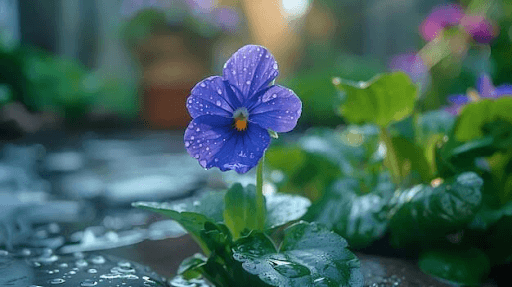
Most people think of the monsoon as a period of maintenance — keeping plants from waterlogging, managing fungal issues, and waiting for the rains to pass. But that’s the wrong frame entirely. For gardeners who know which varieties to work with, the wet season is the most rewarding growing period of the year. Growth accelerates, colour intensifies, and plants that looked tired through the summer suddenly come into their own.
The key is understanding which plants are genuinely suited to the season — not just tolerant of it, but actively thriving because of it. That distinction matters more than most gardeners realise, and it’s the difference between a monsoon garden that looks spectacular and one that merely survives.
How Monsoon Conditions Change the Way Plants Grow
The combination of factors present during the wet season creates a genuinely unusual growing environment. Temperatures drop from their summer peak but remain warm enough for active growth. Humidity rises significantly, which reduces plant water stress even between rain events. The soil, after months of heat and dryness, becomes biologically active again — microorganisms that break down organic matter and make nutrients available to roots become far more productive.
This is why so many plants establish quickly when planted at the start of the monsoon. The conditions essentially do the gardener’s work — the plant gets consistent moisture, moderate temperatures, and nutritionally rich soil all at once. For gardeners in India, this window is arguably the best planting opportunity of the entire year.
Plants with Coloured Leaves That Come Alive in the Rains
Foliage plants often go overlooked in favour of flowering varieties, but some of the most dramatic effects in a monsoon garden come from leaves rather than blooms.
Caladium Few plants produce colour as vivid as caladium. The large, paper-thin leaves come in combinations of red, pink, white, and green — often with contrasting veins and margins that look almost painted. They thrive in the warm, humid conditions of the Indian monsoon and prefer partial shade, making them ideal for spots under trees or on covered terraces. Caladiums die back in cooler weather and regrow from tubers each warm season.
Colocasia (Taro) Already mentioned in the context of monsoon gardening generally, colocasia deserves specific attention for its coloured varieties. The deep purple-black leaves of Colocasia esculenta ‘Black Magic’ are particularly striking — large, glossy, and almost theatrical when wet with rain. It grows vigorously in moist conditions and makes a bold statement in containers or garden beds.
Coleus One of the most versatile foliage plants available, coleus produces leaves in an almost bewildering range of colours — chartreuse, burgundy, coral, bronze, and combinations of all of these. It grows quickly in the monsoon, handles partial shade well, and is easy to propagate from cuttings. Pinching back the growing tips regularly keeps the plant bushy and prevents it from going to flower too early.
Tradescantia The purple-leaved varieties of tradescantia — particularly Tradescantia pallida — produce some of the richest colour in a shaded garden. The trailing stems look excellent in hanging baskets or spilling over the edges of raised planters. It tolerates the monsoon’s wet conditions without issue and requires almost no maintenance beyond the occasional trim.
Rainy Season Flowers Worth Growing
Beyond foliage, several flowering plants specifically time their blooms to the monsoon period.
Impatiens (Balsam) Already a favourite in Indian gardens, impatiens produces continuous colour through the wet months in shades of red, pink, white, coral, and purple. It prefers partial shade and moist soil — exactly the conditions the monsoon provides naturally. Few plants give as much flower for as little effort during this season.
Blue Pea (Aparajita) The intense blue flowers of Clitoria ternatea are one of the most distinctive sights in a monsoon garden. This fast-growing climber produces flowers prolifically during the wet season and is easy to establish from seed. The flowers are also edible and used to make the vivid blue tea popular in parts of Southeast Asia.
For gardeners looking to source a well-chosen mix of monsoon plants — including both foliage and flowering varieties — having access to a curated selection makes it easier to build a garden that looks intentional rather than assembled at random.
Portulaca (Moss Rose) A low-growing, sun-tolerant succulent that produces jewel-bright flowers through the monsoon. It self-seeds readily, which means once established it tends to return year after year with minimal intervention.
Building a Monsoon Garden That Looks Designed
The most visually effective wet-season gardens combine plants thoughtfully — varying heights, leaf sizes, and colour temperatures to create contrast and depth. A few principles that work consistently:
Pair bold foliage with delicate flowers. A large-leaved colocasia behind a mass of small-flowered impatiens creates scale contrast that looks deliberate. Use colour temperature intentionally — cool purples and blues (tradescantia, blue pea) alongside warm oranges and reds (coleus, marigold) create energy and visual interest. Layer heights — groundcovers at the front, medium-height flowering plants in the middle, taller foliage plants at the back — to give even a small bed a sense of depth.
Conclusion
The monsoon is not a season to simply endure in the garden — it’s a season to actively use. The right combination of coloured foliage and seasonal blooms can transform a terrace, balcony, or garden bed into something genuinely impressive during the wet months. The plants exist, the conditions are ideal, and the growing window is generously long. What makes the difference is choosing with intention rather than convenience.