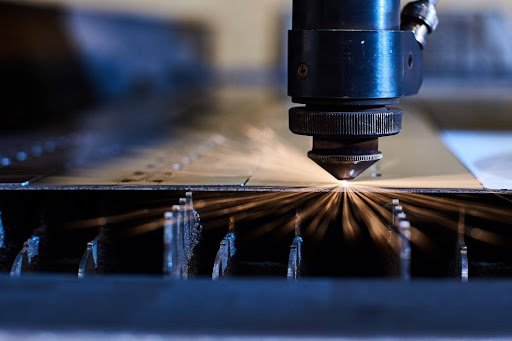
The metal industry has undergone a significant transformation over the past decade, driven by the demand for higher precision, faster production cycles, and cleaner finishes. Among the advanced fabrication techniques shaping this evolution, laser cutting stands out as a revolutionary solution. This technology has redefined how metals are shaped, enabling manufacturers to achieve intricate designs, tight tolerances, and consistent quality across industries such as construction, automotive, aerospace, and industrial manufacturing.
As infrastructure and industrial projects continue to grow in complexity, beam laser cutting in Dubai has become an essential process for companies aiming to meet global quality standards while maintaining speed and efficiency.
What Is Beam Laser Cutting
Beam laser cutting is a non-contact metal cutting process that uses a highly concentrated laser beam to melt, burn, or vaporize material with extreme accuracy. The laser beam is guided by a CNC-controlled system, allowing it to follow complex patterns created through CAD designs. Unlike traditional cutting methods, this process does not rely on physical tools, which eliminates tool wear and ensures consistent performance over time.
The precision of laser cutting makes it ideal for producing clean edges, sharp contours, and fine details with minimal heat impact on surrounding material. This level of control is particularly important in modern fabrication, where even small distortions can compromise structural integrity or visual appeal.
How Beam Laser Cutting Works
The process behind laser cutting involves several carefully controlled stages that work together to produce flawless results.
The first stage is laser generation. A laser source, commonly fiber or CO2-based, is energized through electrical stimulation. This excitation produces a powerful and coherent light beam with a very high energy density.
Next comes beam delivery and focusing. The generated beam is transmitted through fiber optics or reflective mirrors to the cutting head. A precision lens then focuses the beam to an extremely small point. At this focal point, the energy becomes intense enough to instantly heat the metal surface.
The cutting action begins when the focused beam contacts the metal. The material rapidly melts or vaporizes along the programmed path. At the same time, assist gases such as oxygen or nitrogen are directed at the cutting zone. These gases remove molten material from the kerf and help produce smooth, high-quality edges.
Finally, CNC control ensures absolute accuracy. The computer numerical control system guides the laser head across multiple axes, following the exact design path. This allows beam laser cutting in Dubai to meet demanding specifications for both simple and highly complex components.
Key Technologies Behind Beam Laser Cutting
Two main laser technologies dominate the industry today.
Fiber lasers are widely used in modern fabrication facilities due to their high efficiency and excellent beam quality. These lasers use optical fibers doped with rare-earth elements to generate the beam. They are well-suited for cutting thin to thick metals at high speeds, making them a preferred choice for industrial and architectural applications.
CO2 lasers, although more traditional, are still used for specific cutting requirements. They rely on a gas mixture that produces laser energy when excited. While they require more maintenance compared to fiber lasers, they remain effective for certain materials and thickness ranges.
Facilities offering beam laser cutting in Dubai often utilize advanced fiber laser systems to ensure faster processing, lower energy consumption, and consistent cutting precision.
Benefits of Beam Laser Cutting in the Metal Industry
The advantages of Beam laser cutting go far beyond simple metal separation. One of its greatest strengths is precision. The focused beam allows manufacturers to achieve extremely accurate cuts with smooth, burr free edges, reducing the need for secondary finishing.
Versatility is another major benefit. This process can cut a wide range of metals, including mild steel, stainless steel, aluminum, and other alloys. It also enables the creation of complex shapes and detailed patterns that would be difficult or impossible to create with conventional cutting tools.
Speed and efficiency play a crucial role in modern production environments. Laser cutting significantly reduces production time, especially for intricate designs and high-volume projects. Faster turnaround translates into improved productivity and cost savings.
Heat control is equally important. The small heat-affected zone minimizes distortion and preserves the mechanical properties of the material. This makes laser cutting especially valuable for structural components where precision and strength must coexist.
Applications Across Industries
The versatility of laser cutting has led to its widespread adoption across multiple industries.
In the automotive sector, it is used to produce body panels, brackets, chassis components, and structural parts with consistent accuracy.
The aerospace industry relies on laser cutting for manufacturing precision components that require tight tolerances and flawless finishes.
In construction and industrial machinery, the technology is used to fabricate beams, frames, panels, and custom metal parts that demand strength and reliability.
Medical and electronics manufacturers benefit from the ability to produce small, intricate components without compromising quality or accuracy.
As industrial growth continues, beam laser cutting in Dubai plays a vital role in supporting large-scale projects while meeting international standards.
Why Laser Cutting Is Essential for Modern Fabrication
The metal industry is no longer driven solely by strength and durability. Design flexibility, efficiency, and sustainability are equally important. Laser cutting supports these goals by reducing material waste, lowering energy consumption, and improving production accuracy.
By integrating digital design with automated CNC control, manufacturers can move seamlessly from concept to production. This level of integration allows businesses to respond quickly to changing project requirements while maintaining consistent quality.
In a competitive industrial environment, companies that invest in advanced processes like laser cutting gain a clear advantage in performance, reliability, and customer satisfaction.
Conclusion
Laser cutting has become a cornerstone of modern metal fabrication, offering unmatched precision, speed, and versatility. From complex architectural elements to high-performance industrial components, this technology enables manufacturers to deliver superior results with minimal distortion and maximum efficiency. As industries continue to evolve, the role of advanced laser cutting solutions will only become more critical in shaping the future of metal manufacturing.
Morshedi delivers advanced beam laser cutting in Dubai with a strong focus on precision, reliability, and quality. Backed by industry expertise and modern CNC-controlled laser systems, Morshedi supports diverse fabrication needs across construction, industrial, and architectural projects. Their commitment to accuracy, clean finishes, and efficient production makes them a trusted partner for businesses seeking dependable laser cutting solutions.