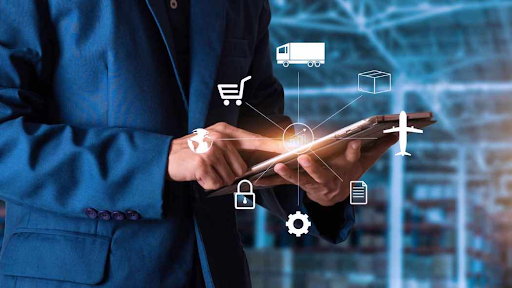
How does it feel when you order your favourite food online, get a notification alert that your groceries are back in stock, or track your medicine supply in real time?
Well, everything is powered by digital tools—thanks to digital supply chain management. Tech-driven logistics has become such an integral part of our lives that we cannot imagine anything in the supply chain that is not digital.
From tracking customer needs and automation to real-time tracking and data-driven decision-making, every process is digital. And hence, organizations are realizing the urgent need for the digitization of supply chains.
In the recent decade, its impact has been profound due to the integration of AI in logistics. Artificial intelligence, blockchain, and IoT are the three major tech trends currently dominating the digital logistics industry market.
However, before diving deep into the importance of digital supply chains in modern businesses. Let’s understand what digital supply chain management means.
A digital supply chain is a network of interconnected processes that utilizes digital technologies, such as AI and blockchain, to manage the flow of goods, services, and information. It replaces traditional, manual effort and encourages real-time digital operations and services.
Let’s now explore the tools and technologies driving this transformation, as well as why it has become immensely crucial for working professionals to possess digital skills to stay relevant in the supply chain industry.
Top Tech Trends Transforming Logistics and Supply Chain: AI, IoT, and Blockchain
In present times, AI in logistics is revolutionizing how goods are sourced, managed, transported, and delivered. Not just that, it is also deeply impacting the efficiency, accuracy, and transparency of the supply chain.
As new technologies emerge and become popular in the market, logistics and supply chains are becoming smarter, predictive, and risk-proof.
Do you know? Companies that opt for digital supply chain management have seen reductions in logistics costs of up to 20%, a 50% improvement in inventory levels, and an 80% increase in delivery performance.
The top tech trends transforming logistics and supply chains are as follows:
- Artificial Intelligence (AI):
AI helps predict demand for goods and services, optimize inventory, and automate processes. Machine language algorithms provide businesses with an additional edge in forecasting supply chain disruptions and improving delivery timelines.
- Internet of Things (IoT):
IoT devices are of great help to the supply chain industry since they are used as sensors on trucks or as RFID tags on inventory. This allows companies to track goods in real time, reducing theft. These devices also help in managing temperature-sensitive items (like medicines, vaccines, etc.) and monitor shipment conditions end-to-end.
- Blockchain:
Blockchain enhances the supply chain’s transparency by maintaining a secure and immutable record of every step in the process. It’s especially useful in industries such as food, medicine, and luxury goods, where it’s crucial to verify the origin of a product and confirm its authenticity.
These technologies are no longer optional; they’re essential for companies that want to compete in the global market and meet the increasing demand for speed, accuracy, and sustainability.
That’s why a growing number of supply chain professionals are upgrading their digital skills through accredited logistics certification programs.
The Future of Global Supply Chains: Tackling Disruptions Through Digitization
Traditional supply chain methods struggled to keep up with rising demands, the need for greater efficiency, faster decision-making, and increased operational transparency. However, with the emergence of new technologies and AI in logistics, it has become easier for businesses to streamline operations, respond quickly to disruptions, and stay competitive in the market.
Gartner predicts that by 2030, 50% of supply chain systems will utilize smart technologies that can make and execute decisions independently, without human intervention. These tools will enable seamless collaboration across different departments to maintain a smooth supply chain.
With digital supply chain management, companies can:
- Spot problems like delays or shortages as they happen
- Use real-time data to make smarter, faster decisions.
- Work more smoothly with suppliers, delivery teams, and partners.
For instance, imagine a manufacturer tracking his shipments through an AI-powered dashboard. If there’s a delay from one supplier or the quantity ordered is not appropriately met, the application will immediately send a notification alerting the team to switch to an alternative supplier. This way the production doesn’t stop, and customers’ demands are still met.
Thus, the future of global supply chains is dictated by digitization and smart technologies. These advancements not only improve speed and efficiency but also bring flexibility, transparency, and visibility across every stage of the supply chain.
The best part is, it helps companies stay in control even when the unexpected happens—be it delays, shortages, or global disruptions. Today, global organizations and corporate giants are actively looking for certified logistics professionals who can become future-ready leaders so that they can understand digital tools, manage complexities, and implement smarter strategies.
Benefits of Implementing Digital Supply Chains
The digitization of supply chain management revolutionizes how businesses deal with raw materials, information, and finances as they move from supplier to manufacturer to wholesaler to retailer to customers.
Implementing digital tools, such as Tableau, Lingo, and Microsoft Excel, into supply chain operations enables companies to work more efficiently and better adapt to market changes. As a result, more companies are actively hiring experienced professionals who hold a recognized logistics certification, as it demonstrates their ability to work with modern digital tools, handle complex supply chain challenges, and contribute to efficient, technology-driven operations.
The benefits of implementing digital supply chains in the industries are as follows:
- Real-Time Visibility
With digital supply chain management, you can track products at every stage—from production to delivery. This helps reduce errors, delays, and losses.
- Greater Efficiency
Automation and predictive insights reduce manual labor, enhance warehouse efficiency, and optimize transportation.
- Faster Decision-Making
With AI in logistics, businesses can respond swiftly to market changes or disruptions and even adapt themselves for long-term growth.
- Cost Savings
It helps with better inventory management, reduces waste, and enables more innovative strategies that lower overall supply chain costs.
- Enhanced Customer Experience
On-time delivery updates, improved product availability, and faster order fulfillment lead to higher customer satisfaction.
In short, digital supply chains create smarter, faster, and more customer-focused operations.
Master Digital Supply Chain Management with IIM Visakhapatnam’s Certification Course
Digital supply chains are creating smarter, faster, and more customer-focused operations. To successfully implement and manage these advanced systems, companies increasingly rely on professionals with logistics certifications who understand both the technology and the supply chain landscape.
The digital supply chain and logistics management program by IIM Visakhapatnam is one of the most prestigious certifications in India, designed for working professionals who want to stay ahead in the logistics and supply chain industry.
The IIM Program in supply chain combines academic depth with real-world applications, enabling you to understand how digital tools, including AI, IoT, Blockchain, Tableau, and Microsoft Excel, are transforming global supply chains. From tracking shipments in real time to analyzing demand patterns and managing inventory digitally, you’ll learn how to apply these tools effectively in your day-to-day role.
Here’s what makes this program stand out:
- Practical learning: Work on real-world case studies and practical assignments
- Learn Digital Tools: Gain skills in widely-used platforms like Tableau, Excel, and more
- Industry-Focused curriculum: Understand how digitization solves real supply chain challenges
- Peer learning and networking: Connect with professionals across industries
- Certification from IIM Visakhapatnam: Boost your career with a brand that’s trusted across the globe
Whether you’re in operations, logistics, procurement, or planning, this certification helps you become a future-ready supply chain professional. It’s ideal for those looking to take on leadership roles, explore global opportunities, or stay relevant in the digital-first economy.
Read More : Everything You Need to Know Before Taking a Supply Chain Course
Final Words
The future of the supply chain is undeniably digital, and it’s already reshaping how businesses operate, make decisions, and serve customers. With digitization of supply chains, we get how AI-driven forecasting and blockchain-powered transparency are actually helping companies become more agile, efficient, and resilient.
For professionals in logistics and supply chain management, this shift presents a golden opportunity. It is for sure that those who upgrade their digital skills and embrace innovation will be the ones leading tomorrow’s supply chains.
So, whether you’re aiming for better career prospects, global roles, or leadership positions in the digital supply chain, now is the time to act. The IIM program in supply chain offers certification to working professionals to take a step toward future-proofing their careers in this tech-driven market. Enroll now and gain the skills, confidence, and credentials to lead the digital supply chains.