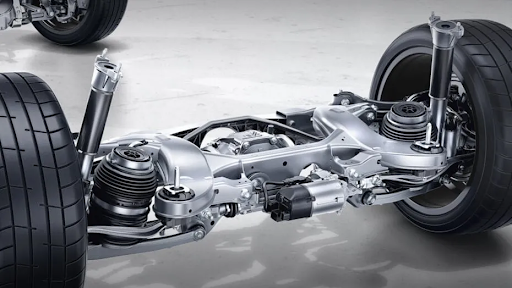
Modern Mercedes-Benz vehicles rely on advanced air suspension systems engineered for precision ride control, dynamic stability, and adaptive comfort. Replacing any suspension component without verified technical alignment can compromise performance, safety, and electronic calibration. This is where the Mercedes air suspension parts catalog becomes indispensable. It functions as a structured technical reference system that ensures accurate part identification based on chassis configuration, model variant, and system architecture. Air suspension replacement is not comparable to conventional coil spring servicing. Each air strut, compressor, valve block, and sensor must correspond precisely with factory specifications. Even minor discrepancies can result in ride height imbalance, compressor overuse, or fault codes.
This blog explains why structured catalog referencing is critical for accurate suspension replacement and how it supports engineering integrity throughout the repair process.
VIN-Based Precision Eliminates Fitment Errors
Accurate suspension replacement begins with vehicle identity verification, not visual comparison or assumption. In Mercedes engineering, even slight production variations influence suspension calibration, making VIN-linked validation the foundation of correct part selection.
- Vehicle-Specific Configuration Mapping: Each Mercedes model has unique suspension settings based on year, trim, drivetrain, and load capacity. VIN-linked catalog referencing ensures replacement parts match the vehicle’s exact mechanical and electronic configuration. This eliminates guesswork and avoids errors from generic or cross-compatible assumptions.
- Accurate Variant Differentiation: Suspension setups vary between standard, sport, and adaptive models, affecting component compatibility. The catalog identifies these differences, preventing selection of visually similar but electronically mismatched parts. Technicians can confidently install components suited to the vehicle’s specific system requirements.
- Reduced Return and Reinstallation Costs: Using incorrect parts often results in reorders, extra labor, and failed recalibrations. Catalog-guided verification minimizes these procurement mistakes. This protects workshop efficiency, reduces downtime, and maintains professional credibility.
Technical Component Alignment Preserves System Integrity
Air suspension systems operate as a synchronized network, where mechanical output and electronic control must remain perfectly balanced. Ensuring component alignment with factory specifications protects system pressure regulation and ride consistency.
- Compressor Capacity Matching: Air compressors vary in output pressure and duty cycle ratings. Installing a unit without matching factory specifications can overload the system or cause premature wear. The air suspension parts catalog clarifies output standards aligned with specific chassis requirements.
- Valve Block and Pressure Regulation Compatibility: Valve blocks regulate airflow distribution across suspension corners. Even slight mismatches can disrupt balance and cause uneven ride height. The catalog provides detailed part codes to ensure airflow calibration integrity.
- Electronic Control Module Synchronization: Air suspension systems are software-integrated. Correct replacement parts must align with onboard control logic. Catalog verification ensures compatibility with existing electronic modules and sensor arrays.
Climate and Operational Factors Require Targeted Part Selection
Environmental exposure and driving conditions directly influence suspension durability and performance stability. Replacement decisions must account for regional stress factors and operational load demands to maintain long-term reliability.
- Heat-Resistant Air Springs: In high-temperature regions, rubber bellows and seals experience accelerated degradation. The catalog distinguishes between variants designed for different operating environments, supporting durability under thermal stress.
- Load-Specific Suspension Ratings: SUV and sedan models often require different load-bearing capacities. Selecting components without referencing rated performance metrics can reduce suspension responsiveness and compromise stability.
- Material and Seal Composition Standards: Replacement components must meet pressure resistance and environmental sealing specifications. The catalog outlines material compatibility, ensuring that installed parts withstand both climate exposure and sustained operational demand.
Structured Diagnostics Support Targeted Replacement
Effective suspension repair is driven by data, not guesswork. Diagnostic interpretation combined with structured catalog referencing ensures that only the true failure points are addressed.
- Fault-Code Guided Identification: Diagnostic scans isolate specific malfunction indicators such as compressor overload, pressure imbalance, or ride-height sensor deviation. Cross-referencing these codes within the catalog maps each issue to an exact OEM part number. This precision eliminates guesswork and supports targeted component replacement rather than full system dismantling.
- Isolated Component Resolution: Air suspension systems consist of multiple interdependent parts, each capable of failing independently. The catalog enables technicians to distinguish between strut failure and auxiliary component issues like valve blocks or height sensors. This structured differentiation ensures accurate root-cause correction instead of unnecessary assembly replacement.
- Avoidance of Over-Replacement: In the absence of catalog validation, workshops may default to replacing complete air suspension units. Structured referencing confirms whether only seals, sensors, or compressors require attention. This approach minimizes repair costs while preserving functional factory-installed components wherever possible.
Long-Term Performance Depends on Engineering Consistency
Sustainable suspension performance is achieved through precision, not partial compatibility. Maintaining factory-level driving dynamics requires every replacement component to match original engineering parameters.
- Preservation of Ride Height Calibration: Mercedes air suspension relies on exact air pressure settings to maintain factory ride height. Selecting the correct replacement parts ensures recalibration matches original specifications. This preserves driving dynamics, comfort, and vehicle handling integrity.
- Balanced Wear Distribution: All suspension elements work in tandem to absorb road forces efficiently. Incorrect or mismatched parts can create uneven loads, accelerating wear on axles and linked components. Using verified parts maintains uniform stress distribution and prolongs system durability.
- Lifecycle Cost Optimization: Accurate first-time component replacement reduces the need for repeated labor or alignments. It also prevents additional strain on compressors and other connected modules. The suspension parts catalog supports long-term reliability and cost-efficient maintenance planning.
Conclusion
Suspension replacement in Mercedes vehicles requires technical discipline rather than assumption-based sourcing. Air suspension systems integrate mechanical precision with electronic control architecture, making exact part alignment critical. The Mercedes air suspension repair Duba provides the structured verification framework necessary to maintain ride stability, pressure accuracy, and system calibration integrity. By ensuring VIN-based identification, electronic compatibility, climate-appropriate material standards, and targeted diagnostics, the catalog transforms replacement procedures into controlled engineering processes.
For automotive professionals and Mercedes owners who demand precision-matched suspension components with complete technical clarity, trusted sourcing platforms like Beta Auto Spare Parts provide structured access to verified parts information, compatibility guides, and expert support. This ensures that every replacement aligns perfectly with the vehicle’s original specifications, enabling accurate, reliable suspension repairs while minimizing errors, avoiding unnecessary part swaps, and maintaining both performance and long-term system integrity.