The demand for innovative content has driven the rise of virtual production technology, revolutionizing how films, commercials, and media projects are created. A virtual production studio combines real-time computer-generated imagery (CGI) with live-action footage, enabling dynamic and immersive storytelling. Behind the seamless visuals lies a suite of sophisticated equipment that forms the backbone of these state-of-the-art studios.
In this article, we’ll explore the dedicated tools and technologies used by a virtual production studio and how they support media production agencies in crafting unparalleled content.
1. LED Video Walls
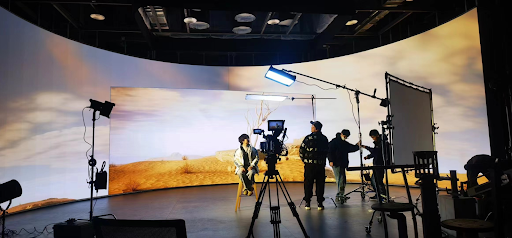
At the heart of any virtual production studio is the LED video wall. This technology allows actors and crew to see and interact with the environment in real time.
Key Features:
- High-Resolution Displays: Provide sharp and vibrant backgrounds.
- Seamless Integration: Synchronizes with camera movements for realistic visuals.
- Dynamic Control: Enables quick changes to the scene, saving time during production.
LED video walls eliminate the need for green screens, offering natural lighting and reflections that enhance the authenticity of the final footage.
2. Real-Time Rendering Engines
To create immersive environments, studios use powerful real-time rendering engines like Unreal Engine or Unity.
Applications in Virtual Production:
- Environment Creation: Generates photorealistic backdrops in real time.
- Interactive Lighting: Adjusts scene lighting dynamically based on camera angles.
- Smooth Integration: Syncs with motion capture and other tools for cohesive visuals.
These engines allow media production agencies to visualize scenes immediately, reducing post-production timelines significantly.
3. Motion Capture Systems
Motion capture technology records actors’ movements and translates them into digital characters or environments.
Components:
- Sensors and Markers: Track precise movements of actors or objects.
- Cameras: Capture detailed data from multiple angles.
- Software Integration: Converts motion data into 3D models.
Motion capture is invaluable for creating lifelike animations or enhancing interactions between live-action and CGI elements.
4. Camera Tracking Systems
Camera tracking systems are essential for aligning virtual environments with physical camera movements.
How They Work:
- Use sensors to track the camera’s position and orientation in real time.
- Synchronize CGI and live-action footage seamlessly.
- Allow directors to visualize the final shot during filming.
This technology ensures that virtual backgrounds stay perfectly aligned with on-set actions, enhancing the realism of the production.
5. High-Performance Workstations
Virtual production requires immense computational power, making high-performance workstations a necessity.
Specifications:
- Graphics Processing Units (GPUs): Handle complex rendering tasks.
- Central Processing Units (CPUs): Manage real-time simulations and data processing.
- Large Memory Capacity: Supports seamless multitasking during production.
These workstations enable media production agencies to handle demanding projects efficiently without compromising quality.
6. Virtual Reality (VR) and Augmented Reality (AR) Tools
VR and AR technologies enhance the pre-visualization and collaboration processes in virtual production.
Applications:
- Pre-Visualization: Allows directors to explore virtual environments before shooting.
- Collaboration: Facilitates remote teamwork by enabling virtual walkthroughs.
- Interactive Adjustments: Allows real-time changes to sets or scenes.
These tools empower creative teams to experiment and refine their vision with unparalleled flexibility.
7. Specialized Lighting Systems
Lighting plays a crucial role in virtual production, and advanced systems are designed to integrate with virtual environments.
Features:
- Dynamic Adjustments: Matches the lighting of the virtual background with on-set actors.
- Natural Reflections: Creates realistic interactions between light and physical objects.
- Precision Control: Tailors lighting to enhance mood and depth in scenes.
Specialized lighting ensures a cohesive and immersive visual experience for the audience.
8. Audio Capture and Synchronization
Quality sound is as important as visuals in production. Virtual studios use advanced audio equipment to capture and sync sound with visual elements.
Components:
- Directional Microphones: Ensure clear dialogue recording.
- Noise-Canceling Systems: Eliminate background noise for cleaner audio.
- Real-Time Syncing: Matches sound with virtual scenes seamlessly.
This ensures that the audio complements the high-quality visuals, creating an engaging final product.
9. Collaboration and Management Software
To streamline workflows, virtual production studios rely on specialized software tools for collaboration and project management.
Features:
- Real-Time Updates: Keeps teams informed of changes during production.
- Asset Management: Organizes digital assets for easy access.
- Remote Access: Enables global teams to collaborate effectively.
These tools ensure efficient coordination, allowing media production agencies to deliver projects on time.
Conclusion
The advanced equipment and technologies used in a virtual production studio are redefining the boundaries of creativity and efficiency in content creation. From LED video walls and motion capture systems to high-performance workstations and real-time rendering engines, each component plays a vital role in producing immersive and visually stunning media.
For media production agency, leveraging these tools ensures that their clients receive top-tier content tailored to modern audiences. As virtual production continues to evolve, it is set to become the cornerstone of innovative storytelling across industries.