In competitive karting, every component affects handling, balance, and overall performance on the track. One factor often overlooked by beginners but closely monitored by experienced drivers is the placement of the kart fuel tank. While the tank’s primary role is to store and deliver fuel efficiently, its position on the chassis can significantly influence weight distribution, steering response, and cornering stability. Understanding how this works is essential for setting up a kart that feels predictable and competitive during a race.
How Weight Distribution Affects Kart Performance
Weight distribution in a kart directly impacts grip, traction, and responsiveness. A kart with too much weight towards the rear may feel light at the front, reducing steering precision, while one with excessive front weight can become unstable on acceleration. Because karts lack suspension systems, small shifts in balance make noticeable differences in performance. The fuel tank, despite being a relatively small component, plays a key role because it holds a variable weight that decreases as fuel is consumed during a race.
Central vs Side-Mounted Fuel Tanks
Central Fuel Tank Placement
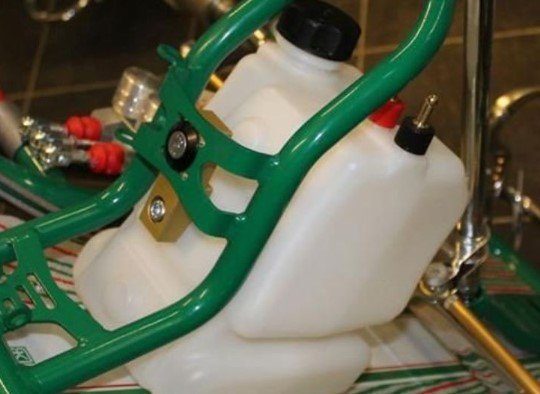
Most modern racing karts use a centrally mounted tank located between the driver’s legs. This design keeps the weight close to the centreline of the kart, which provides better balance and predictable handling. As the fuel level drops, the effect on balance is minimal because the mass is evenly distributed around the chassis.
Side-Mounted Fuel Tank Placement
In older or custom kart designs, fuel tanks can be positioned to one side. While this might simplify installation or refuelling, it creates uneven weight distribution. Drivers may notice the kart pulling slightly towards the heavier side, particularly at the start of a race when the tank is full. This imbalance gradually reduces as the fuel burns off, but it makes the handling inconsistent throughout the session.
Effect of Fuel Level on Handling
Full Tank Scenario
At the beginning of a race or practice, a full tank adds noticeable mass to the kart. If centrally mounted, this extra weight presses down evenly, improving stability but slightly slowing initial acceleration. When side-mounted, however, the kart feels unbalanced, requiring the driver to compensate with steering adjustments.
Mid to Low Tank Scenario
As the race progresses and the fuel burns off, the kart becomes lighter and more responsive. A central tank allows for smooth transitions because the weight reduction occurs evenly. With an off-centre tank, balance continually shifts, leading to inconsistent lap times and increased driver fatigue.
Engineering Considerations for Fuel Tank Design
Manufacturers design tanks with performance and practicality in mind. High-quality materials such as semi-transparent plastics allow drivers to check fuel levels quickly, while removable tanks, like certain modern models, provide easy installation and maintenance. By prioritising lightness and secure fitting, manufacturers ensure that the tank does not rattle, shift, or interfere with handling during high-speed manoeuvres.
The Relationship Between Driver Position and Tank Placement
Because the driver’s weight forms the majority of the kart’s mass, designers carefully align the tank in relation to the seat. By placing the fuel load close to the driver, balance is easier to control. This synergy between driver placement and tank location ensures that both static and dynamic loads remain centred, reducing sudden changes in handling behaviour.
Practical Tips for Racers
- Check Fuel Load Before Setup: Always consider how much fuel is in the tank when fine-tuning chassis settings, as handling characteristics may change throughout a session.
- Inspect Mountings Regularly: A loose or shifting tank can upset balance and pose safety risks.
- Choose Tank Capacity Wisely: A tank that is too large adds unnecessary weight, while one that is too small may not hold enough fuel for the race distance.
- Monitor Wear Patterns: Uneven tyre wear can indicate a weight imbalance, sometimes caused by improper tank placement.
Why Consistent Balance Matters
In competitive karting, fractions of a second decide outcomes. A well-balanced kart provides predictable grip, consistent lap times, and reduced driver fatigue. Since the fuel tank constantly changes weight during a race, its position becomes critical for maintaining stability from start to finish. For this reason, most professional setups favour centrally mounted, lightweight, and removable tanks that minimise handling changes across fuel loads.
Conclusion
The position of the fuel tank in a kart may seem like a minor detail, but its impact on weight distribution, handling, and driver performance is undeniable. A centrally mounted, lightweight design ensures balance, consistency, and confidence for the driver throughout a race. For those looking to optimize their setup further, investing in high-quality go-kart replacement parts such as fuel tanks, seats, and chassis components can make all the difference in achieving peak performance.